
Request a Free Quote

New York Auto Transport
888-222-2065
- Full Insurance Coverage
- Door to Door Shipping
- Price Lock Guarantee
- No Up-Front Deposit
a New York Auto Transport Company
Auto Transport Professionals (ATP) is a top rated auto shipping company providing reliable car shipping services in New York. Whether you’re relocating, buying a car online, or need seasonal vehicle transport, we serve major cities like New York City, Buffalo, and Albany, as well as rural areas. With 20+ years of experience, ATP’s has a track record of safe and efficient vehicle shipping nationwide!
Key Benefits
- Full Insurance Coverage
- Door to Door Shipping
- Price Lock Guarantee
- No Up-Front Deposit
Top Car Shipping Locations in New York
- New York City: The largest hub for vehicle shipping with connections to all major U.S. routes.
- Buffalo: A key destination for shipments to and from the Midwest and Canada.
- Albany: Central access point for Upstate New York and New England.
- Rochester and Syracuse: Popular locations along I-90, ideal for cost-effective transport.
- Long Island: Includes towns like Hempstead and Brookhaven, though delivery can take longer due to traffic congestion and accessibility.
New York: Highways and Routes
New York State has one of the most well-developed highway systems in the country, which makes for simple and safe auto transportation. However, dense traffic, toll roads, and seasonal demand impacts car transport timelines and costs.
Key Highways for Auto Transport
Interstate 87 (I-87):
- Runs north-south, connecting New York City with Albany and Plattsburgh before entering Canada.
- A vital corridor for vehicles heading to and from New York City and Upstate New York.
Interstate 90 (I-90):
- Cuts across New York from Buffalo to Albany, passing through Rochester and Syracuse.
- A critical east-west route for connecting New York State with the Midwest and New England.
- Route Example: Shipping a car from Buffalo, NY, to Boston, MA (~450 miles) follows I-90 and is one of the most cost-effective routes.
Interstate 95 (I-95):
- Runs through New York City and connects with New Jersey and New England, providing access to the Northeast Corridor.
- Heavy traffic and toll roads increase transport times and costs.
U.S. Highway 81 (I-81):
- Serves Syracuse and connects New York to Pennsylvania, ideal for routes heading south.
Challenges of Auto Transport in New York
1. Urban Traffic Congestion
New York City, the most densely populated city in the U.S., poses significant challenges for car carriers. Tight streets, truck restricted roads, and heavy traffic require professionally trained drivers who are also familiar with the city. Door to door car moving will not be available in these densely developed areas!
2. Seasonal Demand
- Fall and Winter (October-March): As the cold sets in, many New Yorkers fly to Florida and have ATP ship their cars to escape the harsh winter. To ship a car from New York to Florida or Arizona at this time is costly due to the increase in demand.
- Spring (March-June) As the warmth returns to NY, the snowbirds who left come back to enjoy the summer! If you ship your car to New York from the southern states at this time expect high car shipping costs.
- Shipping Against the Grain: It is the term I like to use to explain car shipping discounts to New York during these seasons. As the phrase suggests, if you ship a vehicle in the opposite direction of the popular route, you will receive cheap car shipping quotes due to lower demand heading that direction.
3. Toll Roads and Bridges
New York has some of the highest tolls in the country, particularly along routes like the New York State Thruway (I-90) and bridges/tunnels in the NYC metro area. Car carriers in NY adjust auto transport costs accordingly in their quotes.
How Our New York Auto Transport Process Works
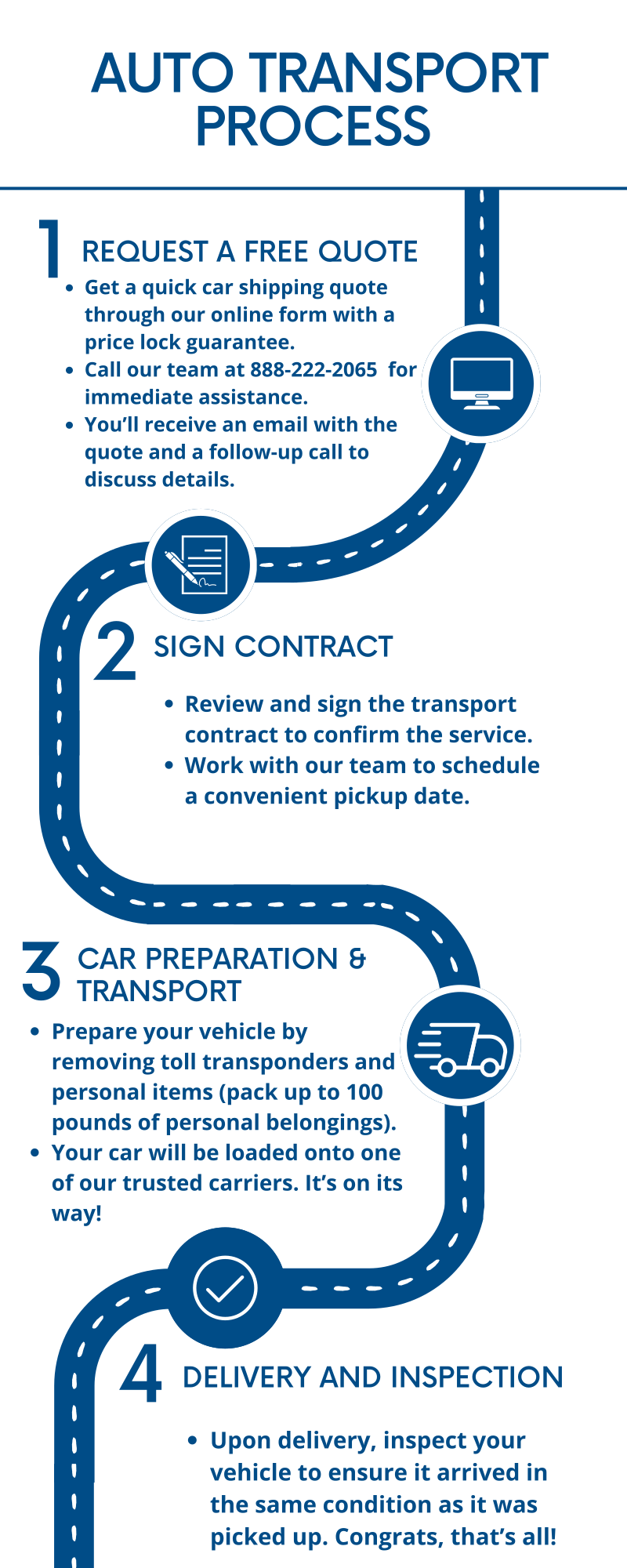
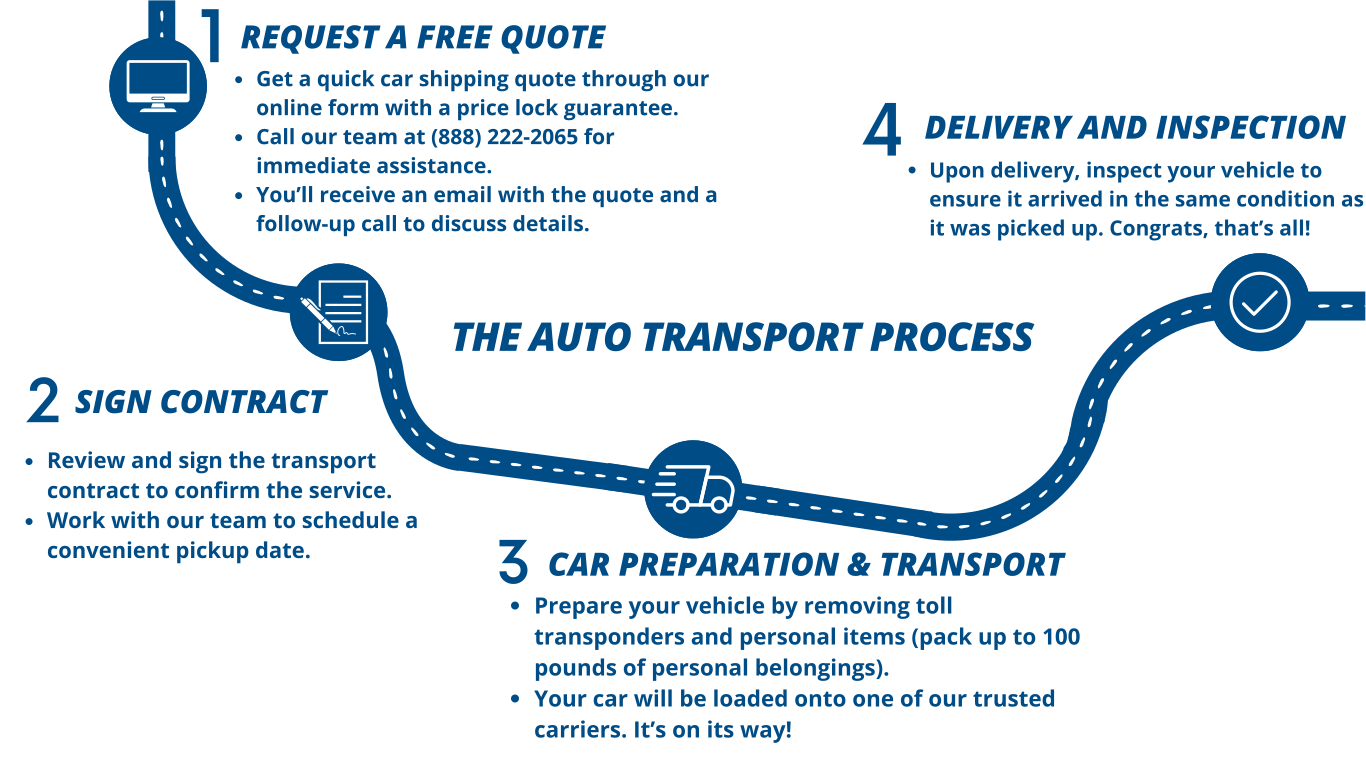
Request Your Free Quote
Get an estimate online or call our team. Provide your vehicle type, pickup, and destination addresses for a personalized quote.
Sign the Contract
Review and finalize your transport quote. Price Lock Guarantee!
Schedule Pickup
Our team coordinates a pickup date that works for your schedule, with door-to-door service available for many areas in New York. Please contact us to see if your address is feasible for this service. 888-222-2065
Prepare Your Vehicle
Remove all personal belongings, disable toll tags, and ensure your vehicle is in good working condition. Take clear photos for documentation. Read our full car shipping checklist prior to shipment.
Safe Transport
The driver will make a detailed inspection report or BOL (Bill of Lading). Once completed he will hand it to you to verify accuracy and for your signature. The car is then loaded carefully onto an open or enclosed carrier and is on its way to its destination.
Delivery and Final Inspection
On delivery, inspect your vehicle for any damage. Once you are done, sign the final paperwork to complete the transport.
Specialized Auto Transport Services in New York
Door-to-Door Auto Transport in New York
Enjoy the convenience of vehicle pickup and delivery directly to your desired locations in New York.
Restrictions apply, please contact us to see if your location is viable for this service. High density areas in most boroughs will not be eligible for this service, you will need to meet the car carrier nearby at a large parking lot or rest area.
Enclosed Auto Transport in New York
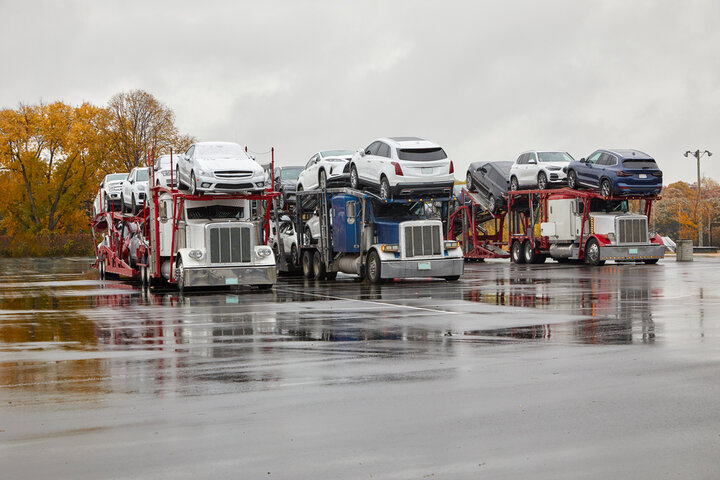
Enclosed car carriers are the best option for classic cars, luxury vehicles, and high-value assets needing extra protection during car transport to New York.
Motorcycle Shipping in New York
Special equipment ensures secure and damage-free shipping for motorcycles across New York.
Heavy Equipment Transport in New York
From RVs to construction vehicles, ATP provides tailored solutions for oversized and heavy-duty equipment shipping in New York.
FAQs about New York Car Transport
Shipping a car from New York to Florida typically takes 3–5 days depending on factors such as carrier availability, weather conditions, and route traffic. This route is popular during snowbird season (fall, winter and spring), which may cause slight delays due to high demand. Booking early can help you secure better rates and delivery times.
Yes, enclosed transport is ideal for luxury, classic, or exotic vehicles that require extra protection. New York’s unpredictable winter weather and congested city traffic increase the risk of exposure to debris, road salt, scratches, dents or suspension damage due to lack of road maintenance. While enclosed car carriers costs 30–50% more than open car carriers, it offers maximum security and higher insurance coverage, making it worth the investment for high-value vehicles.
- Distance and Route: Shorter, regional routes (like NYC to Boston) cost less than long-distance trips (like NYC to Los Angeles). However, longer routes do benefit from a cheaper car shipping cost per mile (CPM)
- Vehicle Type and Size: Larger vehicles, like SUVs or trucks, incur higher costs due to weight and space on the trailer.
- Seasonality: Costs rise during peak snowbird seasons when demand is highest.
- Transport Type: Enclosed car shipping costs more than open car trailer transport but it offers added protection and higher cargo insurance coverages.
- Tolls and Traffic: New York’s expensive toll roads and dense urban congestion add to the overall cost. For example, it costs a 5 axle vehicle (semi truck with trailer) $91.75 to pass from NJ to NY over the George Washington Bridge!
Yes, ATP offers door-to-door delivery across New York. In highly congested urban areas of NYC, door to door car shipping may not be possible. Please contact us to see if your address is feasible for this service. 888-222-2065
Yes, urban congestion in New York City and heavy snow in upstate regions can impact delivery schedules. ATP contracts with drivers who expertly navigate these challenges to ensure a safe and on-time car transport service.
ATP was very cooperative and the transport of the vehicle went according to plan. Vehicle was delivered on time and good condition
Charles D'Angelo
Top Car Shipping Routes for New York Auto Transport
Car Shipping New York to Florida: 1,200 miles | ETA: 2–4 days
Vehicle Transport New York to California: 2,800 miles | ETA: 7–9 days
Auto Hauling New York to Texas: 1,700 miles | ETA: 5–7 days
Car Hauling New York to Nevada: 2,500 miles | ETA: 6–9 days
Auto Shipping New York to Washington: 2,800 miles | ETA: 7–9 days
Vehicle Hauling New York to Miami: 1300 miles | ETA: 3–4 days
Car Transport New York to Arizona: 2,200 miles | ETA: 5–7 days
Auto Transport New York to Colorado: 1,800 miles | ETA: 5–7 days
Car Shipping New York to Naples: 1300 miles | ETA: 3–4 days
Short Distances (up to 1,500 miles): 2-4 days
Long Distances (over 1,500 miles): 5-9 days

Who We Serve in New York
Military Personnel
New York is home to military bases like Fort Drum and West Point. ATP offers secure and reliable car transport for active-duty members relocating within or outside the state.
Snowbirds
Many New Yorkers migrate to warmer climates like Florida or Arizona during the winter months. ATP is an industry leader in smooth snowbird car shipping, so snowbirds can avoid long drives.
Moving
Relocating to or from New York? Whether it’s within NYC or upstate, ATP makes your move easier with safe and reliable auto transport services in New York.
Dealerships
New York’s auto dealerships depend on reliable vehicle transport for inventory replenishment and customer deliveries. ATP works with many car dealers for timely and damage-free vehicle shipping.
Buying or Selling Cars in New York
From luxury car auctions to online transactions, ATP can be a great resource to have when buying or selling a car across state lines. We will provide the perfect auto transport solution in New York.
College Students
New York’s numerous universities, including NYU, Columbia, and Cornell, attract students nationwide. ATP helps transport vehicles to and from campuses and on a budget.

Get Your Free New York Auto Transport Quote Today!
Ready to ship a car to New York? Auto Transport Professionals makes it easy and affordable. Use our car shipping calculator for a quote or call 888-222-2065 to speak with a car transport specialist.
All Areas we service in New York State
New York City & Long Island
As one of the busiest regions for car shipping in New York, we serve all five boroughs:
- New York City – Brooklyn, Queens, Manhattan, Bronx, Staten Island
- Long Island – Hempstead, Huntington, Oyster Bay, Smithtown, Babylon, Islip
Hudson Valley & Downstate New York
For those in the Lower Hudson Valley, our auto transport services cover:
- Yonkers – Hastings-on-Hudson, Bronxville, Scarsdale, Tarrytown, Dobbs Ferry, Ardsley
- White Plains – Scarsdale, Hartsdale, Elmsford, Harrison, North Castle, Purchase
- New Rochelle – Larchmont, Pelham, Eastchester, Mamaroneck, Rye
Further up the Hudson Valley, we offer vehicle transport in:
- Poughkeepsie – Hyde Park, Wappingers Falls, Fishkill, Pleasant Valley, LaGrange
- Kingston – Woodstock, Saugerties, Rhinebeck, Rosendale, New Paltz, Hurley
- Newburgh – Beacon, Cornwall, Marlboro, Montgomery, Wallkill, Plattekill
Capital Region & Central New York
If you’re shipping a car in New York’s Capital Region, we provide service to:
- Albany – Colonie, Guilderland, Bethlehem, Latham, East Greenbush, Rensselaer
- Schenectady – Rotterdam, Scotia, Niskayuna, Glenville, Duanesburg, Princetown
- Troy – Brunswick, North Greenbush, Cohoes, Watervliet, Lansingburgh, East Greenbush
- Saratoga Springs – Ballston Spa, Malta, Wilton, Greenfield, Clifton Park, Stillwater
In Central New York, we serve:
- Rochester – Irondequoit, Greece, Henrietta, Pittsford, Fairport, Webster, Brighton, Gates
- Syracuse – DeWitt, Manlius, Liverpool, Camillus, Baldwinsville, Fayetteville, Skaneateles
Western New York & Southern Tier
For Western New York auto transport, we cover:
- Buffalo – Amherst, Cheektowaga, Tonawanda, Orchard Park, Hamburg, West Seneca, Lancaster
- Niagara Falls – Lewiston, North Tonawanda, Lockport, Wheatfield, Youngstown, Grand Island
In the Southern Tier, we provide service to:
- Binghamton – Johnson City, Vestal, Endicott, Port Dickinson, Chenango, Conklin, Kirkwood
- Elmira – Horseheads, Big Flats, West Elmira, Southport, Pine City, Millport
Upstate New York & Adirondacks
If you’re shipping a car in Upstate NY, we cover:
- Watertown – Fort Drum, Black River, Carthage, Clayton, Sackets Harbor, Adams
- Plattsburgh – Peru, Beekmantown, Morrisonville, Ausable Forks, Champlain, Rouses Point
- Lake Placid – Saranac Lake, Wilmington, Keene, Keene Valley, Tupper Lake
Finger Lakes & Mohawk Valley
For car transport in the Finger Lakes and Mohawk Valley, we serve:
- Ithaca – Lansing, Dryden, Trumansburg, Danby, Newfield, Cayuga Heights
- Geneva – Waterloo, Seneca Falls, Phelps, Penn Yan, Canandaigua, Clifton Springs
- Utica – New Hartford, Whitesboro, Yorkville, Marcy, Frankfort, Clinton, Herkimer
- Rome – Lee, Westernville, Floyd, Westmoreland, Verona, Camden
Catskills & Other Key Locations
For vehicle transport in the Catskills, we cover:
- Monticello – Liberty, Fallsburg, Wurtsboro, Rock Hill, Loch Sheldrake, Bethel
- Oneonta – Cooperstown, Delhi, Hartwick, Otego, Unadilla, Sidney
We also ship cars in other major New York areas, including:
- Middletown – Goshen, Wallkill, Port Jervis, Chester, Pine Bush, Monroe
- Peekskill – Cortlandt, Yorktown Heights, Croton-on-Hudson, Buchanan, Putnam Valley
- Jamestown – Lakewood, Falconer, Frewsburg, Bemus Point, Chautauqua, Mayville
- Price Lock Guarantee
- 20+ Years Experience
- Complete Vehicle Coverage
- No Up-Front Deposit
- Door-to-Door Service
With over 20 years of experience, we are exactly what our name suggests: Professionals. When it comes to shipping your vehicle, you can rely on us to get the job done on time and hassle-free.
Your satisfaction is our success. That’s why we make it our mission to provide dependable, stress-free vehicle transport services. We understand how complicated shipping a vehicle across the country can be, so we guide you every step of the way—from pickup to delivery.
Personalized Support
At Auto Transport Professionals, we understand that every vehicle and transport situation is unique. That’s why we offer personalized car shipping solutions tailored to your needs. Whether you're arranging auto transport as a snowbird, dealer, or individual, our team is here to guide you every step of the way. We specialize in a range of auto transport services, including enclosed transport for added security and open carrier shipping for cost-effective solutions. Whether it's classic car transport, RV transport, or motorcycle shipping, we ensure your vehicle is in safe hands. With us, you're never just another customer—you're a priority.
Affordable Prices
We are committed to offering cost-effective auto transport without compromising on quality. We believe that shipping your vehicle safely and efficiently shouldn’t break the bank. Whether you're relocating across the country, need seasonal vehicle transport as a snowbird, or require specialized services like classic car transport or heavy-duty vehicle transport, we provide clear, competitive pricing tailored to your specific needs. Our nationwide car shipping solutions cover everything from enclosed transport for high-value vehicles to open carrier transport for everyday cars, ensuring your vehicle is protected at every step. With Auto Transport Professionals, you get industry-leading vehicle transport services at rates that make sense for your budget, all while ensuring the safe and timely delivery of your car.
24 hour Quoting
We understand the urgency of getting your vehicle shipped when you're in a pinch. That's why we offer 24-hour quotes for all your auto transport needs. Our streamlined process ensures that within just one day, you’ll receive a competitive, transparent price for shipping your car, truck, or SUV. Whether you’re planning a cross-country move or just need a reliable transport service for a shorter distance, our dedicated team is here to provide fast and accurate quotes, allowing you to plan with confidence and ease.